Guidance on checking current opening details, interpreting “best paying” claims, and assessing what venue and online-pokies information actually supports.
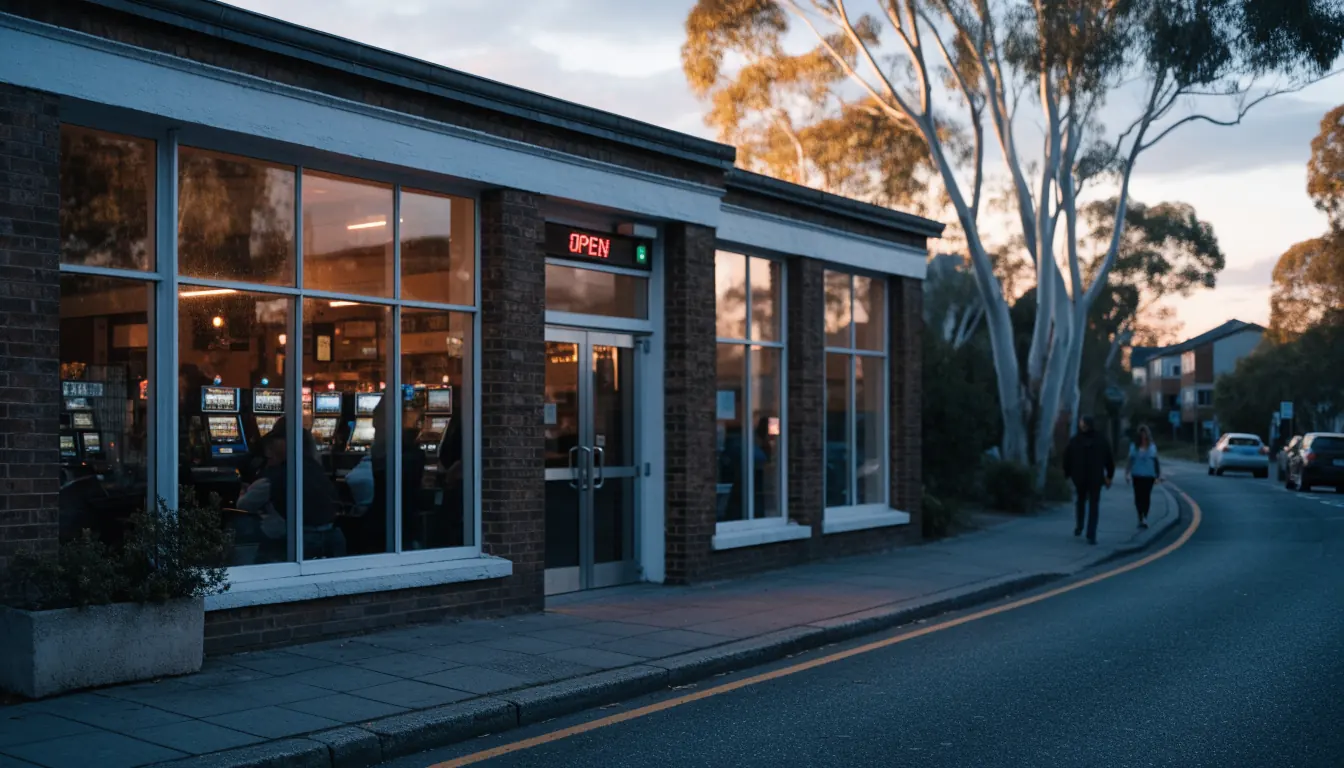
A listing that appears when you look up Canberra pokies is not, by itself, proof that a venue is open at the moment you plan to travel. Opening information can be out of date, refer to a different part of a venue, or show general hours rather than the current status of its gaming area. Treat a displayed “open” label as a lead to check, not a reason to set off.
Start with the venue’s own current channels. Look for a recent notice on its official website or social media account, especially if the page shows a temporary closure, changed service, or a special event. Check that the information applies to the date and time you have in mind. A page that says when a venue generally operates may not confirm that pokies are available right now.
If the venue publishes a phone number, call before leaving. Ask plainly whether the venue is open at that moment and whether its gaming area is operating. Those are separate questions: a building may be accessible while a particular service is unavailable. If staff cannot confirm the gaming area, do not assume that the venue’s general opening status answers it.
Maps and directory listings can be useful for finding contact details, but their opening labels may be based on information supplied earlier and may not reflect a last-minute change. Compare the listing with the venue’s own notice or a direct response. Pay attention to the date of any update, and be cautious if the information is missing, unclear, or inconsistent across pages.
A short call can also settle practical details that an online status cannot. Confirm that the venue is accepting visitors and ask whether access to the gaming area is affected by an event, maintenance, or another temporary arrangement. You do not need to infer anything from a busy-looking map, recent photographs, or a page that has not been updated.
For a trip outside ordinary daytime periods, check the time against the venue’s own information rather than assuming that a late-night or early-morning listing covers every service. If you are considering a particular early hour, ask about that exact time. A general statement about opening hours may have exceptions, and a schedule for the broader venue does not necessarily describe the gaming area.
The closer the check is to your departure, the more useful it is for a decision about whether to travel now. If you checked the previous evening, look again before setting out. Temporary changes can make an earlier answer stale. When the official page is silent and no one answers the phone, the careful choice is to postpone or seek another direct confirmation—not to treat an old listing as a live update.
Keep a record of the exact information you relied on if the trip matters: the page or account you checked, when it was updated, and any confirmation you received. This is not a guarantee that conditions will remain unchanged, but it helps distinguish a current answer from a general directory entry. Avoid relying on snippets copied into other listings when the original notice is available.
Be precise about what you are confirming. “Open” might mean that a venue’s doors are open, that food or drinks are being served, or that pokies are operating and accessible to visitors. State the service you intend to use when you contact the venue. If the answer is only about general access, ask whether it also applies to the gaming area. If the reply is ambiguous, ask for clarification rather than filling the gap with an assumption.
This check is about the status at a particular moment, not a standing timetable. A live confirmation helps you decide whether to leave now; regular operating hours help you plan for another day or a recurring time. Do not use one as a substitute for the other. A venue can follow a usual schedule and still have a temporary interruption, while a one-time confirmation does not establish its normal hours.
The same distinction matters if you are comparing places based on a hoped-for visit. First establish that the relevant venue and gaming area are accessible when you intend to arrive. Only then does it make sense to consider the rest of your plans. A search result, a map marker, or a familiar name can point you toward information, but none of them should be treated as a live confirmation on its own.
Choosing pokies for Canberra means weighing the details available about each casino before you play. Use these verdicts as a quick reference to the licensing, deposit and payout information provided.
Playfina Casino
Playfina Casino is listed with a Curacao eGaming licence held by Hollycorn N.V. since 2017. The minimum deposit is A$20–30, depending on the offer.
House of Pokies
House of Pokies lists PayID payouts of 1–24 hours and a A$30 minimum deposit, or A$10 when using PayID. Its source describes the licence as international but does not name the jurisdiction.
Thor Casino
Thor Casino is listed with a Curacao licence associated with Antillephone N.V. and Versus Odds B.V. Its stated minimum deposit is EUR 20.
Golden Pokies
Golden Pokies is listed with a Curacao licence. That is the licensing detail provided for this casino.
MrPacho
MrPacho lists crypto payouts of 30–120 minutes and fiat payouts of 24–72 hours. The minimum deposit is A$30.
Bizzo Casino
Bizzo Casino is listed with a Curacao Gaming Control Board licence associated with TechSolutions Group N.V. This licensing information is the main available detail.
GoldenCrown
GoldenCrown is listed with Curacao Gaming Control Board licence OGL/2023/176/0095, held by Hollycorn N.V. This licence detail is the notable information provided.
WinSpirit Casino
WinSpirit Casino is listed with Curacao eGaming licence OGL/2024/923/0383, associated with Antillephone N.V. Its minimum deposit is A$30.
SkyCrown
SkyCrown is listed with a Tobique Gaming Commission licence. Its stated payouts take around 10–15 minutes for crypto and 1–5 days for fiat, with a A$30 minimum deposit.
JustCasino
JustCasino is listed with a Curacao Gaming Control Board licence. No other specific details are provided here.
“Best paying” sounds like a straightforward comparison, but a return-to-player figure (RTP) is not a forecast of what you will win. It describes the proportion of stakes a game is designed to return over a very large number of plays. It does not tell you what will happen during a particular visit, or whether a pokie will pay out during your session.
There is another complication: the same pokie may not have the same RTP everywhere. A specialist review reports that some game providers let casinos choose between different RTP settings for a game. If a venue uses one setting and another venue uses a different one, the return percentage attached to the same title can differ. A game name alone, therefore, is not enough to establish which setting is in use.
That distinction matters when you see claims about the best paying pokies in Canberra. A percentage is useful only if it applies to the version actually offered and can be checked against reliable information. A figure copied from another casino, an old review or a general description of the game may not describe the setting at a particular Canberra venue. Nor does a high advertised return make a game a dependable way to leave with more money.
RTP is a statistical measure, not a promise to an individual player. It is calculated across many game rounds, while your own results can be very different. A pokie can return less than its stated percentage during one stretch of play, or more; neither outcome establishes what the next spin will do.
Each spin is generated separately by the game’s random number generator. In practical terms, a run of losses does not make a win “due”, and a recent win does not mean another is likely. The machine is not compensating you for earlier results. Past spins do not provide a reliable way to predict the next one.
This is why a venue-level comparison needs more than a list of familiar game names or an RTP figure with no context. You would need to know that the information refers to the specific game version and setting available there. Without that, a claim that one Canberra pokie pays better than another cannot be treated as a verified comparison.
The same caution applies to searches for Canberra casino pokies or games in the city centre. A general RTP listed for a game does not establish the setting used at a particular venue, and it cannot show how a session will turn out.
If you are comparing information, look for an explicit return figure tied to the exact game and its setting, and check who is making the claim. A game provider’s general information, a venue’s description and a third-party review may answer different questions. If a source does not say which version or setting its number covers, treat the figure as incomplete rather than assuming it applies locally.
The wording “best paying” can also blur two separate ideas: the theoretical return of a game and the chance of a favourable result in a short session. A return percentage addresses the first, over extensive play; it does not give you a useful prediction of the second. Even when the setting is known, it cannot identify a guaranteed winner or tell you when a payout will occur.
For anyone weighing up the best pokies in Canberra, the most honest comparison is a limited one: check whether the RTP information is specific and current, understand that settings can differ between casinos, and do not read the figure as a personal promise.
Searching for online pokies while in Canberra raises a different issue from choosing a local venue: Australian law does not provide a licensed online-casino market. Under the Interactive Gambling Act 2001, it is illegal for a company to offer real-money online pokies to people in Australia without a domestic licence. No such licences have been issued, so there is no Australian-licensed online casino.
The law is directed at operators, not individual players. A person is not made criminally liable simply for playing on an offshore site that accepts Australian customers. That distinction does not make the service lawful in Australia, or give a player the protections that come with a domestic gambling licence. The Australian Communications and Media Authority (ACMA) enforces the law and blocks access to illegal offshore gambling sites; internet service providers must comply with its blocklist.
That creates a gap between what a site may offer and what a Canberra player can safely rely on. If an offshore casino refuses to pay winnings, Australian players have no legal recourse in Australia to compel payment through a local licensing system. A site’s claims about fast withdrawals, large prizes or a generous welcome offer do not change that position. Nor does a “no deposit” promotion remove the practical risk: terms can govern access to a bonus and any winnings, while the player still lacks domestic recourse if the operator does not honour a payment.
The same caution applies to claims that a game pays well, or that a site offers high-limit play. These are not signs of Australian approval. A payment option or an appealing presentation also cannot establish that an operator is licensed here. In particular, PayID is a payment method, not evidence of licensing, fairness or transparent return settings.
Before entering personal or financial details, consider what could happen if the operator disputes your identity, declines a withdrawal or stops responding. Offshore operators may set their own verification rules. You should establish what identity and address documents they require before any first withdrawal; discovering those conditions only after requesting payment can leave you with a balance you cannot readily access. Even completing verification does not create an Australian authority able to enforce the operator’s promise to pay.
There is also a limit to what a local self-exclusion service can do. BetStop applies to Australian-licensed operators; it does not bind offshore gambling sites. Because there is no Australian-licensed online casino, registering with BetStop should not be treated as a way to block access to offshore online pokies. ACMA’s blocking action is aimed at illegal services, but a block is not a personal spending-control tool and does not guarantee that every site or route will be unavailable.
For a Canberra resident, the important distinction is therefore not between an online game labelled “best paying” and another labelled “real money.” It is between a locally licensed service—which does not exist for online casinos in Australia—and an offshore service operating outside the domestic licensing system. The fact that a site accepts Australians, or that a player is not the target of the law, does not supply the missing local protections. If you are weighing an online offer, treat promises of bonuses and payouts as claims to assess, not as a substitute for enforceable rights in Australia.
If you are arriving at Canberra Airport or staying in the city centre, “nearby” is only useful once you know the destination and how you will reach it. A place that looks close on a map may still involve an awkward route, limited transport options or a longer trip back than you expect. Do not treat a search result’s wording as confirmation that a venue is inside the airport, beside it or within easy walking distance of the CBD.
Start with a specific venue address, then check that address against a current map and the venue’s own information. Confirm that the destination is a physical Canberra venue rather than an online result, a similarly named place elsewhere or a general directory listing. If you cannot match the same address across reliable information, do not plan a trip around it.
For an airport arrival, consider the whole journey rather than just the distance on a map. Check whether the route requires a taxi or rideshare, whether public transport serves the destination, and how you would return after your visit. If you are collecting a hire car or travelling with luggage, allow for those practicalities too. A venue described as being “near the airport” may not be convenient for someone arriving without a car.
The same approach applies if you are staying in or travelling to the CBD. Check the exact address, the route from your accommodation and the transport available in both directions. A short-looking journey can be less straightforward if it involves a change of transport or a walk along an unfamiliar route. If you are travelling from another part of Canberra, compare the trip from your starting point rather than assuming the city centre is the most convenient reference.
Canberra, Australia is in the Australian Capital Territory. If your travel plans also involve Canberra in Victoria, check the state and destination carefully before setting out; a place name alone is not enough to identify the right location.
Verifying Venue Location
Confirm the address
Match the specific venue address across a current map and the venue's own official information.
Assess the route
Check for transport options, including taxis, rideshares, or public transport, and consider return trip logistics.
Verify the region
Ensure the destination is in the Australian Capital Territory to avoid confusion with similarly named places in other states.
That means a list of “nearby” options would risk sending you to the wrong place. Treat airport and CBD proximity as something to establish for the individual address, not as a feature you can assume from a broad label.
Before leaving, save the confirmed address and route, and check that your transport plan works for the return journey as well. If a listing provides only a broad area or an approximate pin, look for clearer location details before making the trip. The useful question is not simply whether a venue is described as near the airport or centre, but whether you can verify where it is and reach it safely and conveniently from where you will be.
Choosing a Canberra venue is not simply a matter of finding a room with pokies. Before you go, consider what you need from the visit: clear information about the venue’s policies, staff who can explain where to seek help, and a setting in which you can stick to your own limits. These are useful checks at any venue, rather than a ranking of which one is “best”.
Ask how the venue handles concerns about gambling harm and who you can speak to if you or someone with you needs support. A responsible gambling officer (RGO) is a staff member assigned to that role. A report by regionriverina.com.au says that, from 1 July, venues with more than 20 gaming machines are required to have an RGO on duty while those machines are operating. The threshold refers to the number of machines at the venue; it does not mean every venue has the same staffing requirement.
The same report describes a requirement for venues to maintain a gambling incident register. It is intended to record occurrences, including situations where a patron’s behaviour suggests they may be at risk of, or experiencing, gambling harm. The register is a venue record, not a public scorecard, so its existence will not tell you whether a particular venue is a good fit. You can, however, ask staff how concerns are handled and how to contact the RGO during your visit.
It is also sensible to check the venue’s own rules before settling in. Look for information about responsible-gambling support and ask staff to explain anything that is unclear. If you are visiting with another person, agree in advance on a time to leave or a spending limit you can both respect. A plan made before play is easier to follow than one made after a long session.
Do not treat a polished room or a confident staff answer as proof that play will be safe or that a machine will pay. Venue arrangements concern staff responsibilities and harm responses; they cannot predict the outcome of a spin. If you feel pressured to continue, or notice that the visit is no longer within the limits you set, leaving is a practical option.
For anyone comparing pokies venues in Canberra, useful questions are specific: who is on duty to handle a concern, what support is available, and where the venue explains its policies? Answers may help you decide whether the setting suits your needs. They do not establish that one venue is the best, and no general checklist can make gambling risk-free.
A venue described as operating 24 hours would need to offer access to its gaming area throughout the day and night, not simply stay open late or open early. Those are different claims. A late closing time does not establish round-the-clock operation, and a venue’s general opening hours do not necessarily tell you when pokies are available.
There is no confirmed basis for treating any Canberra venue as operating around the clock. If you encounter that description, look for a current statement from the venue itself that specifically covers gaming access, rather than relying on a search-result snippet, an old directory entry or a broad description of the venue’s trading hours. A restaurant, bar or club may have hours that differ from the hours for its gaming area.
The wording “open now” is narrower still. It asks whether a venue is open at the time you plan to visit; it does not establish that the venue stays open continuously or that its pokies are available at every hour. A listing can also be out of date, so check the venue’s own current information before setting out. If the status remains unclear, contact the venue and ask directly whether the gaming area is open at the time you expect to arrive.
When checking ordinary opening hours, note the day of the week and any stated exceptions. Hours can differ across days, and public holidays or special circumstances may affect them. Make sure the information refers to the relevant venue and to gaming access, not merely to another part of the premises. If you cannot establish those details, do not plan a trip on the assumption that pokies will be available.
A claim of continuous operation also deserves more than a single glance at a map listing. Check whether the wording is explicit, when it was updated, and whether it identifies the gaming area rather than the venue as a whole. If different listings disagree, the venue’s direct confirmation is the more useful basis for deciding whether to travel.
In practical terms, treat “24-hour” as a specific operating-hours claim, not a synonym for “open late” and not a guarantee that machines will be accessible whenever you arrive. Confirm the relevant hours directly, including whether they apply to the gaming area. Without that confirmation, it is safer to regard the claim as unestablished than to assume an all-night option exists in Canberra.
A search for Crown and Canberra does not establish that a Crown venue or Crown machines are located in Canberra. The name in a search result, headline or discussion is not enough to treat a venue as a local option. Before making a trip, look for direct confirmation from the venue itself, including its location and whether it operates gaming machines. Do not rely on a result that appears to combine the two place names without explaining the connection.
The same caution applies to requests for the best pokies room in Canberra. “Best” could mean a preferred atmosphere, a convenient location or something else; it is not a measurable guarantee of what a player will experience. Without confirmed venue details and a clear basis for comparison, a ranked Crown list would suggest more certainty than the information supports.
A maximum cash payout is a separate question from whether a venue exists. There is no single figure that can be applied to every pokie or room. If you are considering a particular machine, ask staff what its displayed rules say about prizes and any payout conditions before you play. A general claim about a maximum should not be taken as confirmation of the rules for a specific machine.
Keep the questions distinct: first confirm that the named venue is in Canberra and offers pokies; then check the rules for the machine you intend to use. If either point is unclear, do not treat a search result or an unsourced payout claim as confirmation.
Looking for pokies at a Canberra club is a narrower task than comparing gaming venues across the city. A club’s name or CBD address alone does not establish that it has pokies, and a general venue listing may not confirm what is available on site. Check the club’s own current information or contact it directly before making a trip.
When you enquire, ask whether pokies are available to members, guests or both, and whether any entry or membership conditions apply. Confirm the address and the relevant area of the premises rather than assuming that a club described as being in the CBD is within easy walking distance of your destination. If accessibility, parking or public transport matters, check those details separately; a venue’s location does not tell you how practical the journey will be.
“Best” is not a useful label unless the basis for comparison is clear. A club may suit you because of its location or facilities, but that does not establish that its machines offer better returns. Each spin is determined independently by a random number generator, so past outcomes do not predict the next one. Treat claims about a machine paying well as claims to examine, not as a reason to expect a win.
If you are considering self-exclusion, ask the club what process it offers, what parts of the premises it covers and how to request it. Self-exclusion is a responsible-gambling tool, alongside deposit, loss and session-time limits, but you should confirm the practical arrangements with the venue rather than assume that one arrangement applies everywhere. BetStop is a separate service: it applies to Australian-licensed operators and does not bind offshore sites.
The distinction matters if you are looking at both physical clubs and online gambling. Real-money online casino games, including pokies, cannot legally be offered to people in Australia by online operators, and there is no Australian-licensed online casino. BetStop should not be treated as a safeguard for offshore gambling sites.
For a CBD visit, use direct checks to establish the details that matter to you: whether pokies are present, what access conditions apply, and whether the venue can explain its self-exclusion arrangements. That is more reliable than inferring a club’s facilities from its name or location.
A reference to Parkes can mean a specific Canberra-area destination, but the name alone does not establish that a particular club, hotel or other venue there has pokies. Treating a place-name match as confirmation can send you to the wrong address—or leave you assuming machines are available when that has not been established.
If you are considering a visit, start with the venue’s own current information. Check that the address is actually in the Parkes area you mean, then contact the venue and ask directly whether it has pokies. A general directory entry, map label or search-result summary may help identify a business, but it does not by itself confirm what facilities are on site. If the venue has more than one public area or entrance, clarify where you need to go before travelling.
Keep the location question separate from whether a venue is open at the time you plan to arrive. Opening information can change, and a listing that describes a business does not necessarily confirm current access to its gaming area. Check directly for the detail you need, rather than relying on a place name or an old listing.
The same care applies to claims about the “best” pokies in Parkes or Canberra. A location label is not evidence of a particular machine selection, and a venue name alone says nothing about the return setting of a game. If a claim matters to your choice, ask what it refers to and whether the venue can substantiate it. A confident description is not a measurable comparison.
For a practical check, record the exact address, the venue’s response about pokies and any conditions it gives for access. That gives you a basis for deciding whether the trip suits your plans without assuming that Parkes identifies a confirmed gaming destination. The useful distinction is simple: a place-name match can point you towards an address, but it cannot stand in for confirmation of the facilities you intend to use.
“Cashless” can refer to different things. A pokie might accept a payment method without cash, while a venue might use a system for play that does not involve notes or coins. Those are not interchangeable claims. A reference to PayID, by itself, tells you nothing about whether a Canberra venue’s machines support cashless play.
PayID is a way to address a bank transfer using an email address, mobile number or Australian Business Number. It operates through the New Payments Platform and needs to be linked to a bank account before it can be used for real-money online casino play. That describes a transfer method, not a feature of a physical pokie. Nor does PayID use establish that an operator is licensed, that a game is fair, or that its return percentage is disclosed.
There is no Australian-licensed online casino. Under the Interactive Gambling Act 2001, operators cannot provide real-money online casino games to people in Australia without a domestic licence, and none have been issued. A payment option should not be mistaken for legal protection.
The Newcastle wording also needs separating from Canberra. The two place names appearing together do not establish that a Newcastle venue is in Canberra, that either location has a particular cashless system, or that a venue in one city is connected to a venue in the other. Treat location and payment claims as separate questions, and look for direct confirmation from the venue before relying on either.
For a practical check, ask the venue whether its machines accept cashless payment, what method is supported, and whether the arrangement applies to the machines themselves or only to another part of the venue. A clear answer should identify the payment method and the relevant machines. A general mention of PayID is not enough.
Yes, Australians can legally play on offshore sites that accept them, but companies cannot legally offer real-money online pokies to Australian residents without a domestic licence, and none have been issued. If an offshore casino refuses to pay you, you have no legal recourse in Australia.
Yes, PayID is treated like any other qualifying deposit method at the sites that accept it.
Yes, some game providers let casinos choose among different RTP settings for the same game. Check the setting for the specific version offered; the game title alone does not establish its RTP.
It is the turnover you must bet before bonus winnings can be withdrawn. For example, a $500 bonus with a 40x requirement means $20,000 in bets; if the requirement applies to a $500 deposit plus a $500 bonus at 35x, it means $35,000 in bets.
Compare the required betting turnover with the bonus and check for limits on winnings or withdrawals. For example, a $500 bonus at 40x requires $20,000 in bets, while a 35x requirement on a $500 deposit plus $500 bonus requires $35,000.