Bitcoin changes how funds move, but it does not determine whether play is free or real-money, or how a game displays its credits.

Bitcoin pokies are digital slot machines that accept Bitcoin as a payment method. The term describes the way payment is handled; it does not mean every game displays Bitcoin as its unit of play. A game may instead show credits on its own screen, with those credits tied to that particular game.
There are two different ways to encounter online pokies: free play and real-money play. Free play lets you use a game without staking Bitcoin or another form of money. Real-money play involves funds with monetary value. That distinction matters because a screen showing reels, a balance or a result does not by itself tell you whether money is at stake. The relevant question is whether the play uses funds that can be lost or paid out.
In free play, the activity is for practice or entertainment without a real-money stake. In real-money play, Bitcoin is part of the payment arrangement, but the game may still express bets and results in credits rather than in fractions of a coin. A credit is a unit used within a particular game, not a universal Bitcoin denomination. Credits in one game do not necessarily correspond to credits in another.
For bitcoin pokies in Australia in 2026, use this list as a starting point for checking the details that matter to you before choosing a casino. In particular, confirm payment options and licensing information directly with the operator.
Playfina Casino
Playfina Casino lists a Curaçao eGaming licence held by Hollycorn N.V. since 2017. You can expect the minimum deposit to depend on the offer, at A$20–30.
House of Pokies
House of Pokies lists an international iGaming licence, though the jurisdiction is not named in the source. If you use PayID, payouts are listed at 1–24 hours; the minimum deposit is A$30, or A$10 for PayID.
Thor Casino
Thor Casino lists a Curaçao licence associated with Antillephone N.V. and Versus Odds B.V. Its minimum deposit is EUR 20.
Golden Pokies
Golden Pokies lists a Curaçao licence. You can use that licensing detail as a starting point when checking the casino.
MrPacho
MrPacho lists crypto payouts at 30–120 minutes and fiat payouts at 24–72 hours. The minimum deposit is A$30.
Bizzo Casino
Bizzo Casino lists a Curaçao Gaming Control Board licence held by TechSolutions Group N.V. You can check the licensing details as part of your review.
GoldenCrown
GoldenCrown lists Curaçao Gaming Control Board licence OGL/2023/176/0095, held by Hollycorn N.V. You can use the licence information when assessing the casino.
WinSpirit Casino
WinSpirit Casino lists Curaçao eGaming licence OGL/2024/923/0383, associated with Antillephone N.V. Its minimum deposit is A$30.
SkyCrown
SkyCrown lists a Tobique Gaming Commission licence. Payouts are listed at around 10–15 minutes for crypto and 1–5 days for fiat; the minimum deposit is A$30.
JustCasino
JustCasino lists a Curaçao Gaming Control Board licence. You can check this licensing information as part of your review.
That separation between payment currency and game credit can make the value harder to read at a glance. A balance displayed as credits needs to be understood in the context of the game using it. A credit amount does not, on its own, state how much Bitcoin it represents or what its value would be in another game. The distinction is similar to reading a price label in one unit and then needing to know how that unit converts to the currency used for payment.
A specialist review describes the Bitcoin value of game credits as dependent on the game and the current BTC price. BTC is the common abbreviation for Bitcoin. Because the coin’s market price changes, a Bitcoin equivalent associated with a credit amount may change as well. The game-specific credit unit and the Bitcoin amount are therefore not interchangeable concepts: one belongs to the game, while the other refers to the payment currency. Treating a displayed credit balance as a fixed Bitcoin amount can give a misleading impression of value.
This also means that the same number of credits should not be assumed to have the same Bitcoin value across different games. The relationship depends on the particular game and the price of Bitcoin at the relevant time. A player looking at a credit balance needs to distinguish what the game is counting from what the payment currency is worth. Without that distinction, a balance can appear more directly comparable than it is.
The phrase “Bitcoin pokies” can also blur two separate questions: what kind of game is being described, and whether the play involves real money. The game is a digital slot machine; Bitcoin is the accepted form of payment for real-money play. The label alone does not establish that a session is free, nor does it explain how credits are represented. You need to know whether the mode is free or real-money and how its credit unit relates to Bitcoin.
Free-play mode should not be mistaken for a real-money account simply because the same game may also be offered for money. Conversely, the presence of credits does not mean that play is free. The key distinction is whether the credits are used without a monetary stake or are connected to funds that carry monetary value. That distinction is more useful than relying on the appearance of the game or the wording of a balance display.
For anyone assessing a real-money arrangement, it is sensible to keep the game’s own credit display separate from the amount of Bitcoin involved. The credit figure tells you about the game’s internal unit; the Bitcoin figure concerns the payment value. Since the relationship can vary by game and BTC price, a credit balance should not be read as a stable measure of Bitcoin value.
Real-money gambling is for adults aged eighteen or over. This explanation is descriptive, not an invitation to play. Australian law restricts the provision of real-money online casino games to people in Australia, a separate issue from how Bitcoin credits are displayed. This page is affiliate material and may include sponsored links.
For anyone searching for Bitcoin pokies in Australia, the legal distinction is more important than the payment method. Bitcoin does not change the rules that apply to online casino services. Australian law prohibits locally licensed online casinos from offering real-money pokies to people who are in Australia. A payment made in cryptocurrency remains a real-money payment; changing the currency does not turn the service into a locally permitted one.
The prohibition concerns the operator’s provision of the service. The Interactive Gambling Act 2001 treats online casino-style games, including pokies, poker and table games, as prohibited interactive gambling services when offered to customers in Australia. This is not a case where an Australian casino can offer real-money pokies simply by adding a Bitcoin option. Nor does the fact that a site can be reached online establish that it is locally authorised.
The operators discussed in connection with this market are offshore services, not locally licensed Australian online casinos. Their licences are primarily issued by Curacao eGaming or the Anjouan Gaming Authority. Those are offshore licensing bodies. A licence from either does not make the operator locally licensed in Australia, and it does not displace the Australian restriction on providing real-money online casino games to people here.
That distinction can be easy to miss when a site presents a licence prominently. A licence may indicate that the operator is subject to some form of oversight in the jurisdiction that issued it; it is not the same as permission to provide online pokies in Australia. The location of the company, the location of its licence and the location of the customer are separate matters. For Australian residents, the relevant point is that the service is offshore and Australian consumer protection laws do not apply to the offshore operators discussed here.
That last limit has practical consequences. If a disagreement arises with an offshore operator, you cannot assume that Australian consumer protections will provide the same remedies or routes for resolving it as they would in a domestic transaction. The existence of an overseas licence does not itself extend Australian protections to the customer or make an offshore operator answerable under the Australian framework. A logo or licence statement on a website should therefore not be read as a promise of local recourse.
The legal position should also be described precisely. Australian law makes it illegal for operators to provide the prohibited real-money online casino services to people physically located in Australia. That statement is about the service and the operator’s conduct; it should not be recast as a claim that an individual player faces a fine or prosecution merely for accessing an offshore site. At the same time, the absence of that claim does not make the service locally licensed or bring it within Australian consumer protections.
The word “offshore” describes where the operator is licensed or based in relation to Australia; it does not mean the service has been approved for Australians. A company may hold an overseas licence and accept customers through a website while remaining outside the Australian consumer-protection framework. Those facts can coexist. For readers, the important distinction is not whether a site displays a licence, but whether that licence is an Australian authorisation. The operators discussed here do not hold local online casino licences.
Bitcoin does not alter any of these boundaries. It is a payment method, not a legal status. A site accepting Bitcoin is still offering an online casino service if customers can stake value on real-money pokies. Likewise, describing a game as a digital product or using cryptocurrency rather than conventional currency does not change the Australian classification of the service. The underlying activity, rather than the label attached to the payment, is what matters to this distinction.
This is why “Bitcoin pokies Australia” can describe what a person is looking for without describing a locally licensed product. In this context, the phrase points to offshore services accessible online, not to a category of Australian-regulated casinos. Accessibility should not be confused with approval, and an offshore licence should not be mistaken for the protection of Australian law. The limits are material when assessing what recourse may be available if a dispute occurs.
This page is affiliate material and may include sponsored links. That disclosure does not change the legal position or turn an offshore service into a locally licensed one. It is separate from the question of whether Australian consumer protections apply: for the offshore operators discussed here, they do not.
Bitcoin changes the payment method, not the nature of the underlying activity. In an online gambling context, it is a digital asset used to transfer value between a player’s wallet and an operator. That can affect how a payment is recorded, what information is visible and which fees apply. It does not make a service lawful in Australia, guarantee that an operator will handle funds fairly, or remove the risks of gambling.
Blockchain technology is the system that records Bitcoin transactions across a shared network. The record is designed to be difficult to alter, which is why Bitcoin transactions are often described as highly secure. That description concerns the transaction record itself. It is not a guarantee that every part of a gambling service is secure: an operator’s account systems, website, customer support and handling of withdrawals are separate matters.
The distinction matters because a secure transfer can still be sent to an unsuitable destination, or an operator can still impose its own checks and processing procedures. Security at the network level does not verify an operator’s conduct or give you the same recourse you might expect from a conventional payment provider. Bitcoin’s technical design and a service’s reliability are not interchangeable.
Bitcoin is sometimes presented as anonymous, but a more careful description is that it can offer a degree of anonymity compared with traditional payment methods. A specialist review describes this relative privacy as one of Bitcoin’s characteristics. That is not the same as being untraceable, and it should not be read as a promise that a gambling account or payment cannot be linked to you.
A Bitcoin transaction is recorded on the blockchain. The record does not necessarily display a person’s name beside an address, but addresses and transactions are visible, and other information held by a wallet provider or an operator may identify an account holder. Operators may also ask for identity documents or crypto-specific proof of wallet ownership. A payment method that reveals less personal information at the point of transfer therefore does not necessarily prevent identity checks.
This trade-off may matter if you value keeping payment details separate from a bank or card statement. But relative privacy should not be confused with legal protection, confidentiality in every part of the process or an ability to avoid an operator’s terms. Nor does it make a transaction reversible. The public record can preserve a transaction without resolving a dispute about what the operator should do next.
Bitcoin transfers involve miner’s fees: charges associated with processing transactions on the network. These fees vary over time. A specialist review characterises them as usually minuscule, but that is a source’s description rather than a fixed price or a promise about what a particular transfer will cost. The amount can change, so a general statement about Bitcoin fees cannot tell you the cost of a specific payment.
A separate comparison sometimes made is that Bitcoin transactions tend to cost less than credit-card and other conventional payment transactions. A specialist review makes that comparison, but it should not be treated as a universal rule. Costs depend on the payment route and the circumstances at the time, and the network fee is not necessarily the only charge connected with a transfer. The operator or an intermediary may have its own terms. Check the costs shown for the transaction rather than assuming the payment method is free or cheaper in every case.
Fees also do not tell you whether a service is suitable. A low-cost transfer can still involve an offshore operator, limited recourse or the possibility of losing money through gambling. A payment comparison is a narrow comparison; it says nothing by itself about consumer safeguards.
Bitcoin does not change the value of a game’s credits or make them stable against changes in the price of Bitcoin. Nor does it change an operator’s rules for accounts, withdrawals or verification. Those matters depend on the service, not on the blockchain. Payment technology can alter how value moves, but it cannot make the terms clearer or ensure they are applied fairly.
For people in Australia, the legal and consumer-protection context remains important. Real-money online casino services are prohibited for operators providing them to people in Australia, and Australian consumer protection laws do not apply to the offshore operators discussed on this page. Using Bitcoin does not alter that position. This is not a recommendation to use an offshore casino or a claim that a particular service is safe.
This article is affiliate material and may include sponsored links. That disclosure does not change the limits of Bitcoin or the legal position described above. If you are under eighteen, do not gamble for real money.
Bitcoin can be bought with ordinary currency through a cryptocurrency exchange and held in a digital wallet. A wallet is the tool used to store and send Bitcoin; it is separate from a casino account.
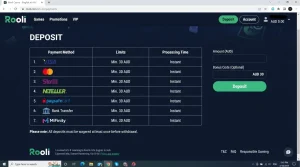
An offshore casino payment flow is often described as a transfer from the player’s wallet to an address supplied by the operator. A withdrawal flow reverses the direction: the player enters a wallet address in the operator’s withdrawal form. These are descriptions of how such transfers are structured, not a recommendation to use an offshore gambling service. Real-money online casino games are prohibited for operators to provide to people in Australia.
Bitcoin Transfer
Sending a Deposit
Transfer Bitcoin from your digital wallet to the specific address supplied by the offshore operator.
Requesting a Withdrawal
Enter your own digital wallet address into the operator's withdrawal form to receive funds.
Address accuracy matters in any Bitcoin transfer. Blockchain transactions cannot generally be reversed, so funds sent to the wrong address may be unrecoverable. A payment form and a wallet address are not interchangeable: the destination must be the address intended for that particular transfer.
Bitcoin transfers also carry a miner’s fee, paid in connection with processing the transaction on the network. The fee changes over time. A specialist review describes these fees as generally very small, but that is not a fixed price or a guarantee about the cost of a particular transfer. Check the fee shown by the wallet before confirming any transaction.
The network transfer is only one part of a payment. An operator may still need to record a deposit or approve a withdrawal, so a blockchain transaction and the balance shown in an account are not necessarily updated at the same moment. A specialist review reports that most Bitcoin withdrawals are completed within an hour; this is a reported timeframe, not a promise that every request will be processed that quickly.
A payment can appear straightforward on a screen and still fail to reach the point where it is credited or released. With Bitcoin, a transfer recorded on the blockchain and a balance updated by an offshore gambling operator are separate events. If the amount does not appear, or a withdrawal remains pending, first identify which part of that process has stalled. Do not assume that a delay means the funds are lost, but do not treat a displayed status as proof that the operator has completed its part either.
A deposit may go uncredited because the receiving address was reused, the amount sent was below what the operator required, or the operator has not yet detected the transaction. These causes call for different checks. Compare the transaction details in your wallet with the payment instructions you were given, including the destination address and amount. Then look for a transaction record in the wallet. If it appears there, note its transaction identifier; if it does not, the transfer may not have been sent.
Address reuse can make it harder for an operator to match a payment to the right account. A payment sent to an address that was previously supplied may not be associated with the new deposit as expected. An underpayment can also leave a deposit uncredited if the amount received does not meet the stated requirement. A delayed update may simply mean that the operator has not yet detected or recorded the payment. These possibilities are reasons to gather the relevant details, not to send another payment as a test.
Keep a record of the amount, the destination address, the time you sent the transfer and any transaction identifier shown by your wallet. If you contact the operator, give the information needed to trace that specific payment and keep a copy of the exchange. Avoid posting wallet screenshots or transaction details publicly: they can reveal information about your activity. A transaction identifier can help locate a transfer, but it does not guarantee that the operator will credit it.
Before sending any further funds, check whether the original payment is still pending in your wallet and whether the operator has provided a response. Sending a second transfer may create another unresolved payment rather than fix the first one. If the address or amount was wrong, explain exactly what happened; do not change the facts in the hope of getting a faster response.
A withdrawal can be delayed after you submit a request, even when the request appears correctly entered. Common causes include an operator’s approval queue, incomplete identity checks, or processing that is handled in batches during business hours. The delay may therefore be on the operator’s side rather than in the Bitcoin network. A pending status by itself does not tell you which stage is holding the payment.
Check the withdrawal record for a stated status or request for information. If the operator asks you to complete a check, make sure you understand what is being requested and use the operator’s official account or support channel to respond. Keep copies of the request and your reply. Repeated messages sent through different channels can make it harder to follow what has been asked and answered; a dated record is more useful.
If there is no clear explanation, ask whether the withdrawal is awaiting approval, additional information or processing. Keep the question factual and retain the response. Do not accept a vague request for more money as a normal way to clear a withdrawal. Never deposit more money to unlock, release or speed up a stuck withdrawal. A demand for an extra deposit is not proof that the original funds will be paid. Stop and preserve the messages and payment records rather than risking further loss.
Bitcoin transfers are irreversible on the blockchain. If you send funds to an incorrect address, they are generally unrecoverable; there is no ordinary reversal process that can simply return them to your wallet. This makes the destination address the most important detail to check before confirming a transfer. If the address was supplied by an operator but copied incorrectly, contact the operator with the transaction details. If the destination belongs to someone else, recovery may depend on that recipient’s cooperation, and should not be expected.
Australian consumer protection laws do not apply to the offshore operators discussed in this context. That leaves you with fewer local avenues if a payment is disputed or a withdrawal is not resolved. Australian law also prohibits locally licensed online casinos from offering real-money casino games to people in Australia; the offshore status of an operator should not be mistaken for local approval. Anyone under eighteen must not gamble for real money.
This page is affiliate material and may contain sponsored links. That disclosure does not change the risks of an irreversible transfer or the limits of recourse if an offshore operator does not resolve a payment problem.
Account checks can become more demanding when you ask to withdraw. Initial registration may involve basic details, while a later review can require identity and address documents. Some operators may request those documents at a first withdrawal; others may do so after cumulative deposits reach a threshold somewhere between AUD 2,000 and AUD 5,000. The point at which a check is triggered depends on the operator, so an account that has passed registration checks may still face further questions later.
Crypto-related checks are separate from confirming your identity. An operator may ask you to show that you control the wallet used to make a deposit. A specialist review describes possible requests such as signing a message from the deposit address or supplying a wallet screenshot that shows the sending transaction. These are examples of checks that may be requested, not a standard process that every operator follows. Before sending anything, read the operator’s instructions and make sure you understand what information the requested proof will reveal.
A specialist review recommends completing the identity and wallet checks before requesting your first withdrawal, ideally within 24 hours of registering. It presents this as a way to remove a common source of payout delays. Treat that as a practical recommendation rather than a promise: early verification may prevent a request for documents from interrupting a later withdrawal, but it cannot ensure that an operator will approve a payment by a particular time. Keep copies of the information you submit and any messages confirming that the checks have been completed. If a new request arrives, compare it with the operator’s published verification requirements and ask for a clear explanation if it is unclear.
Verification is only one possible source of a dispute. Bonus terms can create a different problem when they do not explain how each game counts towards wagering requirements. A contribution percentage indicates how much play on a particular game is credited towards those requirements. The rules may assign different contributions to pokies and table games, so the same amount of play can count differently depending on what you choose.
The stated contribution pattern can be zero per cent for table games and the full amount for pokies, while some high-return-to-player pokies may have a contribution capped at 50 per cent. A cap means that only part of eligible play counts, even if the game otherwise falls within the bonus rules. These figures are not a promise that every operator applies the same terms: check the specific bonus conditions before accepting an offer or playing with bonus funds.
Look for a game-by-game table or an equally clear explanation. If the terms use broad wording such as “eligible games” without showing how contributions differ, ask the operator to clarify in writing before you play. Save the response and the version of the terms that applied when you accepted the bonus. That record can help establish what you were told if the credited wagering later appears inconsistent with the published rules.
Maximum-bet conditions need the same attention. A bonus may set a maximum stake while bonus funds are active, and exceeding that limit can result in bonus play being voided. Check whether the restriction applies to each spin or round, how the operator treats a sequence of bets, and whether it applies while wagering requirements remain. Do not assume that a limit is irrelevant because the stake seems small or because the game itself accepts it. If a rule is hard to interpret, pause and seek clarification rather than relying on an assumption that may later be disputed.
If the operator says a bonus has been voided, ask which term it believes was breached and request the relevant account or play record. Compare the explanation with the saved terms and retain the correspondence. A dispute about contribution rates is not the same as a dispute about verification: keep those issues separate in your questions, and ask for a specific response to each one. Avoid sending additional deposits simply because a bonus or withdrawal is under review.
This is affiliate material and may include sponsored links. That disclosure does not change the need to assess the terms and verification requirements carefully, and it is not an endorsement or a guarantee about any operator. Real-money gambling is for adults aged 18 and over.
You can play pokies in free-play mode without staking Bitcoin. For real-money play, Bitcoin does not change the Australian rules: locally licensed casinos cannot offer online pokies to people in Australia, and the services discussed are offshore.
Australian law prohibits locally licensed online casinos from offering real-money pokies to residents. Offshore operators may also require stage-two verification when you first withdraw or when cumulative deposits reach AUD 2,000–5,000, depending on the operator.
The operators discussed hold offshore licences, primarily from Curacao eGaming or the Anjouan Gaming Authority, but these licences do not authorise them to provide online pokies in Australia. Australian consumer protection laws do not apply to these offshore operators.