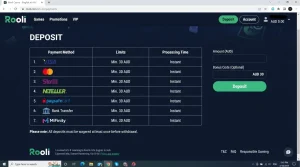
Payment labels do not confirm legality, suitability or withdrawal speed, so compare how each route handles deposits and payouts.

Payment options can look like a simple menu, but the labels describe different ways money is handled. A bank-linked transfer, an e-wallet, a prepaid voucher and a card are not interchangeable: each has its own provider, account requirements and processing route. Seeing a name on a payment page tells you only that the page presents it as an option. It does not establish that the method is suitable for every transaction or that the service itself is lawful in Australia.
That distinction matters particularly for Australians. Under the Interactive Gambling Act 2001, it is illegal for operators to provide real-money online casino games, including pokies, poker and table games, to people physically located in Australia. A payment portal displaying familiar Australian or international brands does not change that legal position. Nor does a payment method’s availability turn an offshore casino into a service that may legally provide those games here.
The term “casino payment solution” can also blur separate things. A payment method is what you choose to send or receive money; a payment provider or system handles part of the transaction; and the operator’s payment page is where the available choices are displayed. The same name may appear in different contexts, but that does not mean every route works in every direction. A specialist review describes casino payment methods as potentially differing between deposits and withdrawals, so the menu should not be read as a promise that one method covers both.
Choosing a casino payment method means checking the details that affect your deposit and withdrawal experience. Use this list to review the payment-related information available for each operator before deciding what suits you.
Playfina Casino
Playfina Casino lists a minimum deposit of A$20–30, depending on the offer. Its stated licence is Curacao eGaming, held by Hollycorn N.V. since 2017.
House of Pokies
House of Pokies lists PayID payouts in 1–24 hours and a minimum deposit of A$30, or A$10 when using PayID. Its source describes an international iGaming licence but does not name the jurisdiction.
Thor Casino
Thor Casino lists a minimum deposit of EUR 20. Its stated Curacao licence is associated with Antillephone N.V. and Versus Odds B.V.
Golden Pokies
Golden Pokies is listed with a Curacao licence. No deposit minimum or payout-speed details are provided.
MrPacho
MrPacho lists crypto payouts in 30–120 minutes and fiat payouts in 24–72 hours. Its minimum deposit is A$30.
Bizzo Casino
Bizzo Casino’s stated licence is from the Curacao Gaming Control Board and is associated with TechSolutions Group N.V.
GoldenCrown
GoldenCrown lists a Curacao Gaming Control Board licence, OGL/2023/176/0095, held by Hollycorn N.V.
WinSpirit Casino
WinSpirit Casino lists a minimum deposit of A$30. Its stated Curacao eGaming licence is OGL/2024/923/0383 and is associated with Antillephone N.V.
SkyCrown
SkyCrown lists crypto payouts at approximately 10–15 minutes and fiat payouts in 1–5 days, with a minimum deposit of A$30. Its stated licence is from the Tobique Gaming Commission.
JustCasino
JustCasino is listed with a Curacao Gaming Control Board licence. No deposit minimum or payout-speed details are provided.
Options can differ from one operator’s page to another because payment arrangements are not a single universal menu. The operator determines which methods it presents, and the payment provider and the customer’s circumstances can also affect whether a route is available. A familiar logo is therefore not proof that the transaction will be accepted. A method described online may no longer appear when you reach a payment page, or may be shown only for a particular kind of transaction.
The broad categories can still help you understand what a page is referring to. Bank-linked methods move funds through a bank account or a bank’s payment network. E-wallets hold or route money through a separate account. Prepaid vouchers let you spend the value loaded onto them. Cards draw on a payment-card account, while cryptocurrency uses blockchain networks. These are different mechanisms, not interchangeable endorsements. In particular, cryptocurrency transfers are irreversible and have no chargeback option; that is a material risk, not a minor technical footnote.
Searches for Bitcoin, Revolut or Volt alongside casino payments can also produce pages that mix general payment information with claims about particular operators. A result mentioning a method does not confirm that it is currently offered, that it can be used for a withdrawal, or that the service is lawful for people in Australia. This is one reason broad lists of “Australian casino payment options” can be misleading: they may combine methods that are unavailable, methods that work only in one direction, and methods mentioned in older descriptions.
Treat payment names as clues to what a page claims to support, not as proof of a complete or dependable payment route. The choice of method and the legality of the underlying gambling service are separate questions. In Australia, the latter is decisive: real-money online casino services cannot lawfully be provided to people located here, whatever payment symbols appear on the screen.
A payment option shown when money is going into an account does not, by itself, tell you how money could come back out. Depositing and withdrawing are different stages, and the methods available at each stage may not match. A specialist review describes this difference between casino payment methods; because an operator’s arrangements can change, treat a displayed option as something to verify for the specific transaction, not as a promise about the full journey.
That distinction matters before you enter any payment details. If you focus only on whether a deposit can be made, you may overlook the route proposed for a later withdrawal. The practical question is not simply whether a payment method appears in a portal. It is whether the terms say it can be used in the direction you need, and what alternative would apply if it cannot.
Vouchers make the distinction especially clear. Paying via a voucher can put funds into an account, but a specialist review reports that voucher deposits generally cannot be returned to the voucher. You may therefore need a separate cashout method. The voucher is not a complete in-and-out payment route, even if it is presented as a way to pay.
Before proceeding, read the withdrawal information as carefully as the deposit instructions. Look for the methods that are available for withdrawals, any conditions attached to them, and whether the payment details must match the account holder’s details. If the information is unclear, do not assume that the option used to pay will also work for a withdrawal. Ask the operator for a clear answer before you submit a transaction.
Keep a record of what the portal and its terms say at the time. Payment pages can present several options without making their different roles obvious. A label may sit beside a deposit button while the withdrawal rules appear elsewhere, or a method may be offered for one direction only. A screenshot or saved copy can help you compare what was shown with the response you receive if a question arises later. It cannot make a method available, but it can preserve the wording you relied on.
This is a form of payment risk management: decide how money could leave before deciding how it might enter. It is especially relevant when a payment method is not linked to a bank account that can receive a transfer, or when a voucher is involved. Do not treat a successful deposit as evidence that the operator has accepted the same route for a withdrawal. Processing one direction establishes only that the payment worked for that direction.
There is a further Australian consideration. The Interactive Gambling Act 2001 prohibits operators from providing real-money online casino services, including pokies and table games, to people in Australia. A payment portal, or a method that appears to work, does not alter that legal position or make an offshore casino service compliant with Australian law. A payment option is not a safeguard.
For a straightforward check, trace the proposed movement of funds both ways: identify the deposit route, identify the stated withdrawal route, and confirm any conditions before paying. If the only clear information concerns deposits, you do not yet have a clear picture of how a withdrawal would be handled. With a voucher, assume you will need a different cashout route unless the operator’s written terms explicitly establish otherwise.
A payment route that feels familiar in Australia is not necessarily available for an online casino transaction. The method shown at checkout depends on the operator and the payment arrangements it offers, while Australian financial institutions may also restrict certain transactions. That makes local availability a practical issue, not just a matter of recognising a bank or payment brand.
Links a mobile number, email, or ABN to a bank account via the New Payments Platform; availability depends on the operator.
Used as a backup when PayID is unavailable, typically with a processing estimate of one to two business days.
Visa and Mastercard are widely recognised, but Australian financial institutions may block transactions to offshore casinos.
Prohibited gambling transactions in Australia since 2021, regardless of whether an operator lists it as an option.
PayID is supported by every major Australian bank. It links a mobile number, email address or Australian business number to a bank account through the New Payments Platform. That domestic reach does not mean PayID will appear as an option at every payment screen. A specialist review describes its availability as dependent on the operator, so check what is actually displayed rather than assuming bank support guarantees acceptance.
BPAY is another familiar name, but it serves a different pace. A specialist review gives a processing estimate of one to two business days for BPAY payments. The same kind of review describes BPAY as rarely used for real-time gameplay and as a possible backup when PayID is unavailable. In practical terms, a payment that takes time to clear is not interchangeable with a route intended to move funds immediately. Check the operator’s stated timing before relying on it.
Cards can look like the most straightforward alternative because Visa and Mastercard are widely recognised. But recognition does not guarantee that a transaction will go through. A specialist review reports that Australian financial institutions block many standard card transactions directed to offshore casinos. The restriction may therefore sit outside the payment screen: entering valid card details does not compel the bank to approve the charge. If a card payment is declined, repeated attempts may not resolve a block imposed by the institution.
PayPal has a clearer boundary. It has prohibited gambling transactions in Australia since 2021, so its familiar checkout option should not be treated as a route for these payments. This is not simply a question of whether an individual operator has added PayPal to its list. The service’s Australian gambling policy rules it out.
These differences matter against the local legal setting. The Interactive Gambling Act 2001 prohibits operators from providing real-money online casino games to people in Australia. Payment availability does not change that position or establish that a service is lawful for Australian customers. A familiar Australian payment brand is not a sign of local authorisation.
When comparing payment choices, separate three questions: whether the method is supported by your bank, whether the operator displays it, and whether the transaction is permitted under the payment provider’s rules. PayID’s broad bank support answers only the first. BPAY’s slower stated processing makes timing relevant, while card blocks and PayPal’s policy can prevent a familiar route from working at all. None of these names, by itself, guarantees a completed payment.
A payment gateway is the intermediary that carries a selected payment method into a transaction. It passes the payment request between the account or payment service and the processing system, then relays the result. In practical terms, it helps turn a choice on a payment screen into a request that can be approved or declined.
That role is narrower than it may appear. A successful deposit confirms that the payment was processed for that transaction. It does not, by itself, confirm that the same method can receive a withdrawal, that a withdrawal request will be approved, or how quickly funds would arrive. The gateway handles a payment instruction; it is not a complete statement of an operator’s account rules.
This distinction matters when a payment page displays a familiar option. Seeing a method in a deposit menu tells you what the page is offering for that direction of payment. It does not establish that the method is available for money leaving the account. A specialist review has reported that PayID deposit availability depends on the operator and that withdrawal support needs to be checked separately. Treat that as a point to verify for the specific service, not as a permanent market-wide rule.
Payment technology can also make the screen look more definitive than it is. A gateway may show a transaction status, but that status concerns the payment request being processed. It cannot settle questions that sit elsewhere, such as account eligibility, verification requirements, or the operator’s withdrawal rules. Those need to be confirmed through the relevant terms or directly with the service.
If a transaction fails, the gateway’s response may help identify whether the request was declined or not completed. But a generic error message may not explain the underlying reason. The issue could relate to the payment method, the account, or the processing route; the status alone may not distinguish among them. Avoid repeatedly submitting the same request before you understand what happened, particularly if your bank or payment service shows a pending transaction.
The useful way to read a payment screen is therefore as evidence about one step, not the whole movement of money. Check what the gateway is asking you to authorise, whether the transaction has actually completed, and what the operator says about withdrawals as a separate matter. A smooth deposit flow is not proof of a matching cash-out route. Payment gateways connect the parts of a transaction; they cannot confirm every condition attached to the account behind it.
A prepaid voucher separates the amount set aside for a payment from the funds in a bank account or wallet. You load value onto the voucher, then use it to pay where that voucher is accepted. For that transaction, the available value sets the ceiling: the payment cannot exceed what remains on the voucher. This can make the amount allocated to a payment easier to keep track of, but it does not set a limit on spending through other methods or on an account as a whole.
That distinction matters when considering a voucher as part of a casino payment system. A voucher can control only the funds loaded onto it; it cannot determine what other payment routes might be used or change the terms attached to an account. Treat it as a way to pay a defined amount, not as a spending control for every transaction.
The more important limitation may appear when money is to leave an account. Voucher payments generally cannot be returned to the same voucher as a withdrawal. If a balance is eligible to be paid out, you may therefore need a separate cashout method. The fact that a voucher appears as a payment choice does not establish that it can receive money back, or that another route will be available for withdrawals.
Before paying, check the conditions for the specific voucher and the account, including whether the voucher can be used for the intended transaction and what alternative withdrawal route is supported. Do not assume that the payment system treats money going in and money coming out as matching steps. A voucher’s spending cap answers how much can be paid from its loaded value; it does not answer how a withdrawal would be handled.
This is a general explanation of payment mechanics, not a recommendation to use an online casino. In Australia, the Interactive Gambling Act 2001 bars operators from providing real-money online casino services, including pokies and table games, to people located in the country. A payment option being described online does not alter that legal position or establish that the service is available lawfully to Australian residents.
The practical point is narrow but consequential: a voucher can limit the amount paid from the value placed on it, while leaving the withdrawal question unresolved. If you cannot identify a separate, supported way for funds to be returned, do not treat the voucher as a complete payment arrangement. A payment method is only one part of the transaction, and a cap on what goes in is not a route for money to come back out.
Before entering personal or payment details, establish whether the service is lawful where you are and who is asking for the information. In Australia, the Interactive Gambling Act 2001 prohibits operators from providing real-money online casino games, including pokies, poker and table games, to people in the country. A payment page does not change that legal position. Do not treat a polished portal or a familiar payment logo as evidence that a service is authorised to offer online casino gambling in Australia.
There is also a difference between a page that accepts details and a service that has established your identity. A successful payment does not, by itself, confirm that the account has passed verification or that the person requesting your information is entitled to it. Be cautious if the portal’s details do not match the service you intended to access, or if you cannot find clear information about who operates it and how your information is handled.
A specialist review reports that an operator may ask for government-issued identification, proof of address dated within the previous three months, and evidence that you own or control the payment method. These requests can involve sensitive material, such as an identity document or a record connecting you to a bank account or payment service. Consider what you would be disclosing before uploading anything. Do not send documents through an unfamiliar link or reply to an unsolicited message with copies of your identification.
If a request for evidence appears, check the account or service directly rather than relying on a link in an email or text. Read the instructions carefully and check whether the requested document is relevant to the stated purpose. If you are unsure who will receive it, or how it will be used, do not upload it. A request for identity documents is not proof that the service is legitimate.
Payment brands can create a misleading sense of familiarity. Seeing PayPal, POLi, Boku or Neosurf mentioned on a page does not establish that the payment is permitted, that the method is available, or that the page is trustworthy. PayPal has explicitly prohibited gambling transactions in Australia since 2021; the presence of its name should not be read as approval of an online casino payment. Treat claims about any payment option as claims to verify, not as a reason to provide account or identity details.
No-deposit promotions are not necessarily free of conditions: wagering, verification and withdrawal requirements may still apply. Read the terms before sharing personal information or taking up an offer. The key check is not simply whether a casino payment portal accepts your details, but whether you should be providing them at all.
A withdrawal’s stated processing time may cover only one part of the journey. The casino may first review and release a request; the payment service or bank then handles the transfer. A casino payment provider can connect those stages, but it does not make them equally quick. Check whether a quoted time refers to the operator’s approval or the money reaching your account.
Bank transfers can involve manual processing rather than a continuous queue. One specialist review describes casino transfers as being handled once or twice a week; in its example, a request made on Friday could arrive by Wednesday. Treat that as an illustration of a possible schedule, not a promise about every operator. A transfer may also carry a flat fee: the same kind of review reports charges of $5 to $15. Confirm the current fee and processing schedule before choosing this route.
Skrill offers a different trade-off when withdrawing to a bank. A specialist review puts that leg of the journey at one to two days, while noting that some casinos charge a transaction fee of 1% to 3%. The fee may matter more as the withdrawal grows, so compare the amount you expect to receive, not just the quoted speed. Check whether both the casino and Skrill apply charges, and whether the casino’s stated time begins before or after it approves the withdrawal.
Cryptocurrency withdrawals can be quicker, but network conditions matter. A specialist review estimates Litecoin processing at about 10 minutes and says Bitcoin can take as long as an hour when its network is congested. These are not fixed arrival times: network traffic and the operator’s own review can affect how long you wait. The same review describes crypto withdrawals as generally free of casino charges, but that does not mean every transfer has no cost. Network fees may still apply.
There is also a less forgiving difference: blockchain transfers are irreversible and cannot be disputed through a chargeback. Check the destination address and currency carefully before confirming a withdrawal. A mistake cannot be treated like a bank transfer sent to the wrong details and simply recalled.
When comparing online casino payment processing, separate the operator’s approval time from the delivery time, then compare fees and the practical risks of each route. A faster estimate is not necessarily a better option if charges reduce the amount received or a transfer cannot be reversed. The available methods and their terms can vary by operator, so read the withdrawal rules for the specific account rather than relying on a general payment-provider description.
“Instant” describes a particular step in a transaction, not the whole journey of money. A payment page may show that a deposit has been processed promptly; that does not establish how quickly a withdrawal would be handled, or whether the same route can be used to receive one. The word is narrower than it sounds.
A specialist review describes Visa and Mastercard deposits as instant. Treat that as a statement about processing speed, not proof that a card will work for you or that it can be used to cash out. The available route depends on the payment arrangement, and a successful deposit does not settle the withdrawal question.
There is also a practical Australian complication: a specialist review reports that many standard Visa and Mastercard transactions to offshore casinos are blocked by Australian financial institutions. So a method described as fast may not be usable in the first place. A declined transaction is not a slower version of an instant payment; it has not gone through.
That distinction matters especially for card payments, where the speed claim can distract from more basic questions: is the transaction permitted by your bank, and is the service lawful to provide where you are? Under the Interactive Gambling Act 2001, operators cannot provide real-money online casino games to people physically located in Australia. A label on a payment screen does not change that legal position.
The same caution applies to the phrase “instant payment” more broadly. It may refer only to the time between confirming a payment and seeing a balance update. It says nothing by itself about checks before a withdrawal, the operator’s handling time, or the time required for funds to reach a bank account. Nor does it establish that a payment option shown for deposits is supported for withdrawals.
Before entering payment details, read the terms for the specific transaction and check your bank’s position. Do not treat a speed claim as assurance that a card is available, suitable or reversible. The useful question is not simply how quickly a payment is described as moving, but what stage that description covers—and whether the route can be used at all.
A payment app can make a deposit feel like a single phone action, but that says little about how money can leave an account. The important distinction is between a wallet being accepted to pay and being available as a withdrawal destination. Treat those as separate functions, not two sides of an automatic process.
A specialist review describes Apple Pay as a way to make deposits through a phone’s digital wallet, with biometric authentication used to approve the payment. That describes the payment step; it does not establish that Apple Pay can receive a withdrawal. Do not assume it can. Check the available cashout routes separately, and do not plan on Apple Pay as a withdrawal method.
PayID is another example where the direction matters. A specialist review reports that its availability for deposits depends on the operator and that withdrawal support needs separate confirmation. The presence of a PayID option on a payment screen therefore does not settle whether it can be used to receive funds. The details may change, so rely on the current payment information rather than an old description.
Wallet names and payment labels can also appear in searches or on payment pages without confirming that a service is available to you, or that it works in both directions. A deposit option is not a promise of a matching withdrawal option. Before entering payment details, check the operator’s stated rules for both the payment method and the destination for any withdrawal. If the latter is unclear, do not infer it from the app’s logo or from a successful deposit.
Some specialist reviews describe MuchBetter withdrawals as faster than bank-transfer cashouts, which they say can take up to five days. That is a comparison reported by a review, not a timing guarantee for a particular transaction. Processing can depend on the operator’s arrangements, so check the stated terms before relying on a wallet for access to funds.
There is also a legal boundary that payment convenience does not change: the Interactive Gambling Act 2001 prohibits operators from providing real-money online casino games to people physically in Australia. A wallet’s ability to process a payment does not make such a service lawful.
A phone number can be more than a way to contact you during a payment. PayID lets a mobile number, email address or Australian Business Number (ABN) act as an identifier linked to an Australian bank account through the New Payments Platform. If a payment page offers PayID, the number is therefore part of a bank-linked transfer, not a mobile-phone bill charge.
That distinction matters when you see references to a “mobile payment”. The phrase can describe a payment initiated on a phone, rather than a payment charged to your phone account. Read the instructions on the payment page carefully and check which account will send the money. Do not assume that using a phone to make a payment means the phone number itself is the payment method.
Availability is not something to infer from the label. A specialist review reports that PayID deposits depend on the operator, and that withdrawal support needs to be checked separately. Treat that as a prompt to verify the specific service’s current terms, not as a guarantee that PayID will appear in its payment options. Before any deposit, confirm which withdrawal routes are available and whether the method you intend to use is supported for cashing out.
There is also a legal point that a payment screen cannot resolve. Under Australia’s Interactive Gambling Act 2001, providing real-money online casino games to people physically in Australia is illegal for operators. A working PayID option does not make such a service lawful, or establish that an Australian authority approves it. Payment access and legal status are separate issues.
If you are reviewing a payment page, check the PayID details against the bank account you intend to use, and make sure you understand how the service describes both incoming and outgoing transactions. A phone number may be the identifier, but the linked bank account is still central to the transfer. Keep those two details distinct, and do not treat a successful deposit as evidence that the same route can return funds.
Yes, some charge fees: bank transfers may cost $5–$15, and some casinos charge 1–3% for Skrill transactions. Currency conversion from AUD to EUR can also cost 2–4%, while crypto withdrawals are usually free.
Yes, some offshore casinos accept cryptocurrencies, including Bitcoin and Litecoin. However, accepting a payment method does not make it lawful for an operator to provide real-money online casino games to people in Australia.
No payment method changes the legal position: operators cannot lawfully provide real-money online casino games to people located in Australia, whether deposits are made with crypto or otherwise.
Many standard Visa and Mastercard transactions to offshore casinos are blocked by Australian financial institutions, even though card deposits may be presented as an option.
No. PayPal has banned gambling transactions in Australia since 2021.